

Calm, consistent support for seniors with memory decline
Caring for a loved one with dementia or advancing frailty can feel overwhelming. Our trained caregivers bring gentle structure, familiar-routine companionship, and proven memory-care techniques — giving your family breathing room and your loved one a sense of security.
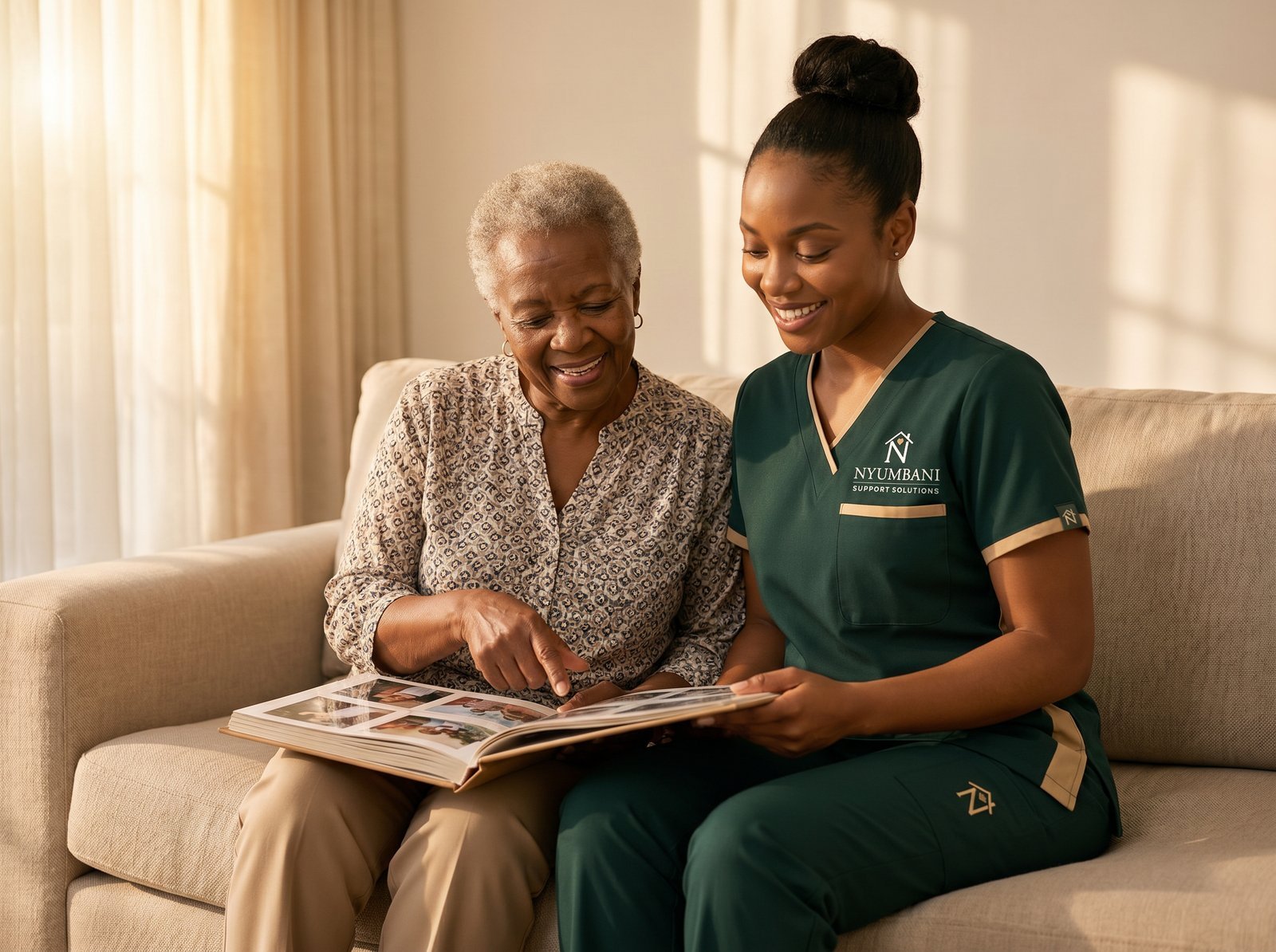
Specialist support built around the individual
Dementia care is not one-size-fits-all. We build each care plan around the person — their history, preferences, triggers, and the family's goals.
Familiar-Routine Companionship
Consistent daily routines — the same caregiver, the same schedule, the same gentle approach — to reduce confusion and anxiety in seniors with memory decline.
Fall Prevention
Active monitoring of gait, balance, and mobility — combined with home environment adjustments to reduce fall risk for frail seniors.
Gentle Redirection Techniques
Trained use of validated dementia communication techniques — calm redirection, validation therapy, and distraction — to manage confusion and distress without confrontation.
Memory-Care Activities
Purposeful daily activities — reminiscence, music, gentle crafts, short walks — that engage cognition, reduce agitation, and maintain a sense of purpose.
Family Education & Coaching
Practical guidance for family members — how to communicate, what to expect as the condition progresses, and how to protect your own wellbeing as a carer.
Environment Adjustments
Practical home modifications — labelling, lighting, removing hazards, simplifying layouts — to create a calmer, safer environment that reduces confusion.
When dementia and frailty care is needed
- A parent or elder has been diagnosed with dementia, Alzheimer's, or related cognitive decline
- You're noticing confusion, wandering, or agitated behaviour that the family struggles to manage
- A senior has significant frailty or fall risk that makes living alone unsafe
- The family is exhausted from full-time caring and needs respite and professional support
- A loved one is in early-to-mid stage dementia and you want structured, expert support now
- You need someone to observe behaviour patterns and communicate them clearly to the physician
Consistency above everything
Life History Assessment
We meet with the family to understand the person — their history, preferences, triggers, and what brings comfort — before any care begins.
Personalised Care Plan
A routine-based plan is created — visit schedule, daily activities, communication approach, and family update structure.
Same Caregiver, Every Visit
We assign one consistent caregiver — familiarity is protective for people with dementia and reduces agitation significantly.
Ongoing Behaviour Observation
Changes in sleep, appetite, agitation, or function are noted and shared with the family and physician — enabling timely medical response.
You don't have to do this alone
Caring for someone with dementia is one of the hardest things a family faces. Let's talk about how we can take some of that weight — with trained, patient, consistent professional support at home.
Request a Free Assessment